
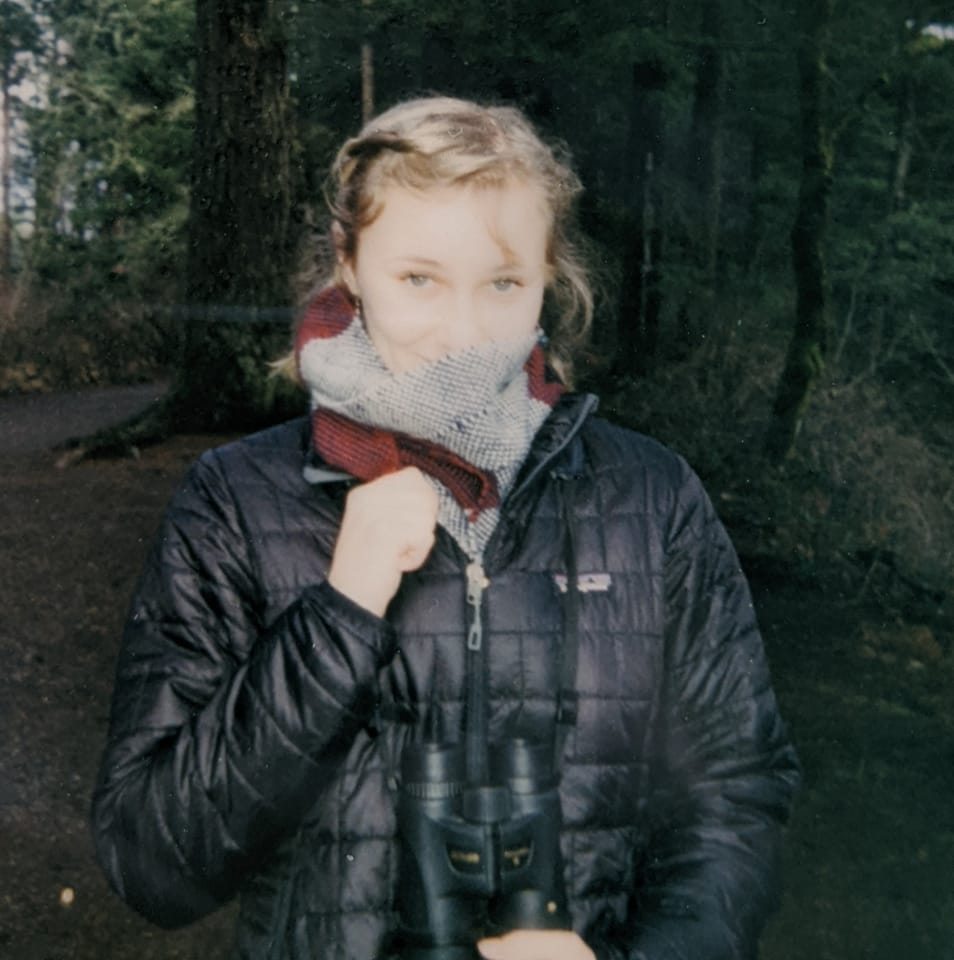
After graduating from the University of Washington in 2020 with a bachelor’s in English, Sophie Aanerud moved from her home city of Seattle, WA to Philadelphia, PA, where she now spends her time writing, illustrating, and learning her birds. Her writing focuses on the intersections of nature and human experience, with a predilection for all things surreal.
Her work has been published in the UW Library Guide, Indiana Review Online, The Desiderium, The Fishwrapper, and The Daily UW.
Email: orcasaanerud@gmail.com
What is “Magnificent Spring?”
It took me twenty years to develop an interest in birds. This is not entirely true; compared to most American children, I’d have been considered an animal enthusiast, cooing over Canada jays and kestrels, and even dedicating my third grade “American Hero” report to Rachel Carson. But for the daughter of the Chairperson of the Washington Bird Records Committee, a child who had binoculars coaxed around her neck before she could tie her shoes, my interests were superficial at best. It was after years spent lagging behind my parents, grumbling over salt marshes and unenthusiastically squinting through scopes just to appease my dad and his birder friends, that I found myself flipping through my family’s dog-eared Sibley Guide to Birds on my own accord.
Many recent converts to birding reference the unexpected joy attained through learning one’s birds. It is as if a new and feathered dimension is revealed as what was once written off as background unfurls into flocks of purple martins and soaring turkey vultures; the tree outside your window becomes a hub of drama as the downy woodpecker taps for grubs, disturbing a pair of nesting chickadees who flit about anxiously among warblers resting mid-migration. In this era of eco-anxiety spurned by a constant stream of headlines elucidating political and corporate negligence in the face of climate change (only a few months ago, for example, the Biden administration approved ConocoPhillips’ Willow oil drilling project in Alaska), I find myself looking to the birds for optimism and motivation.
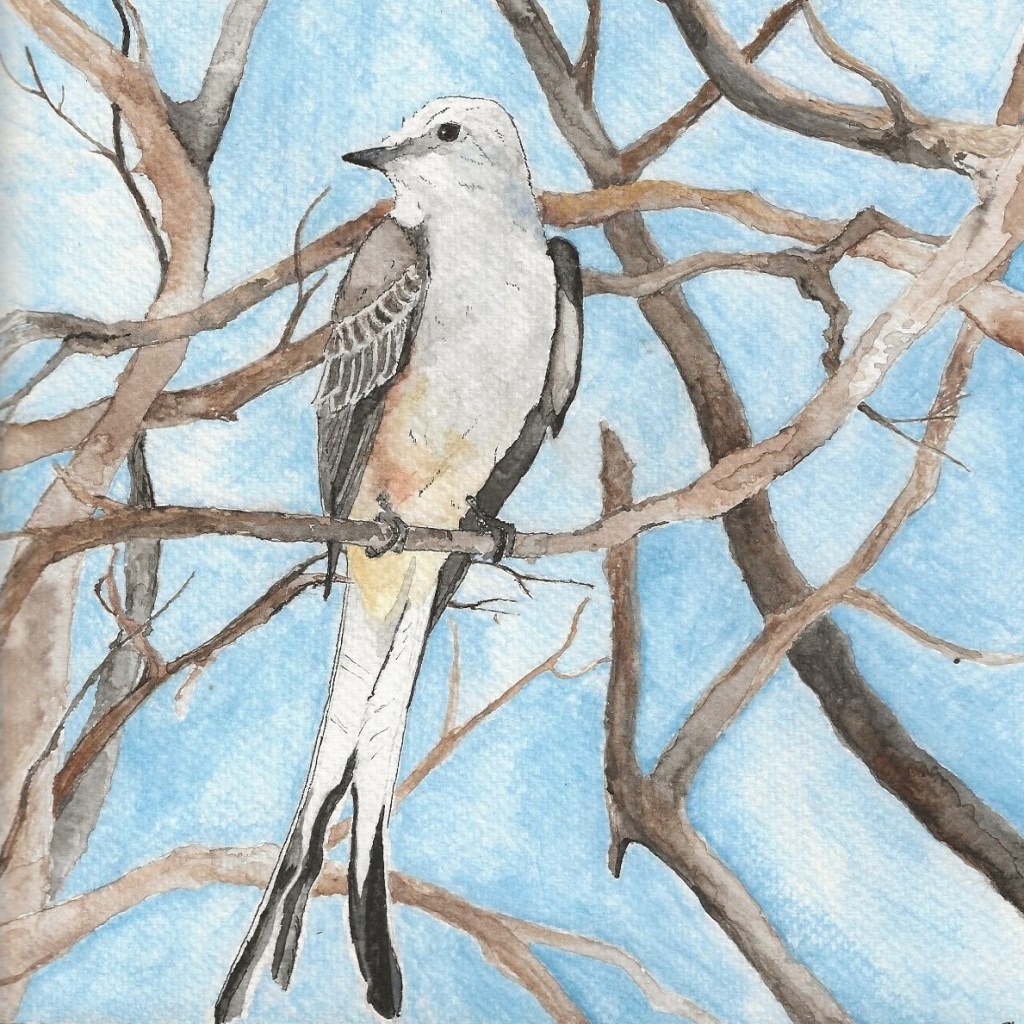
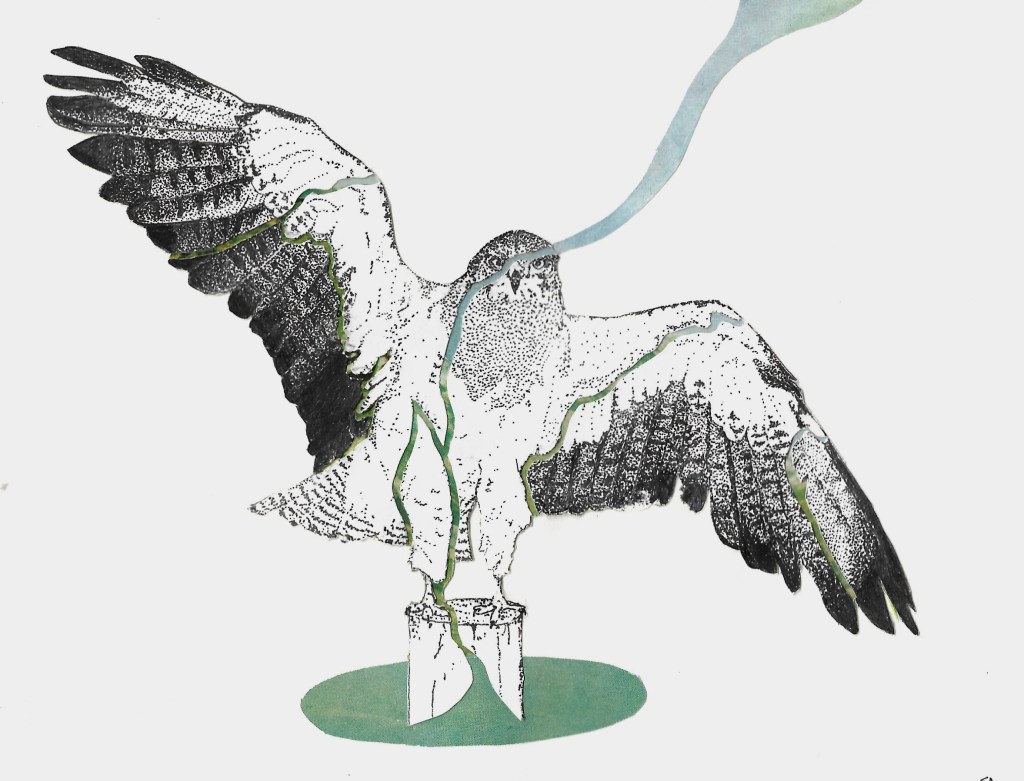
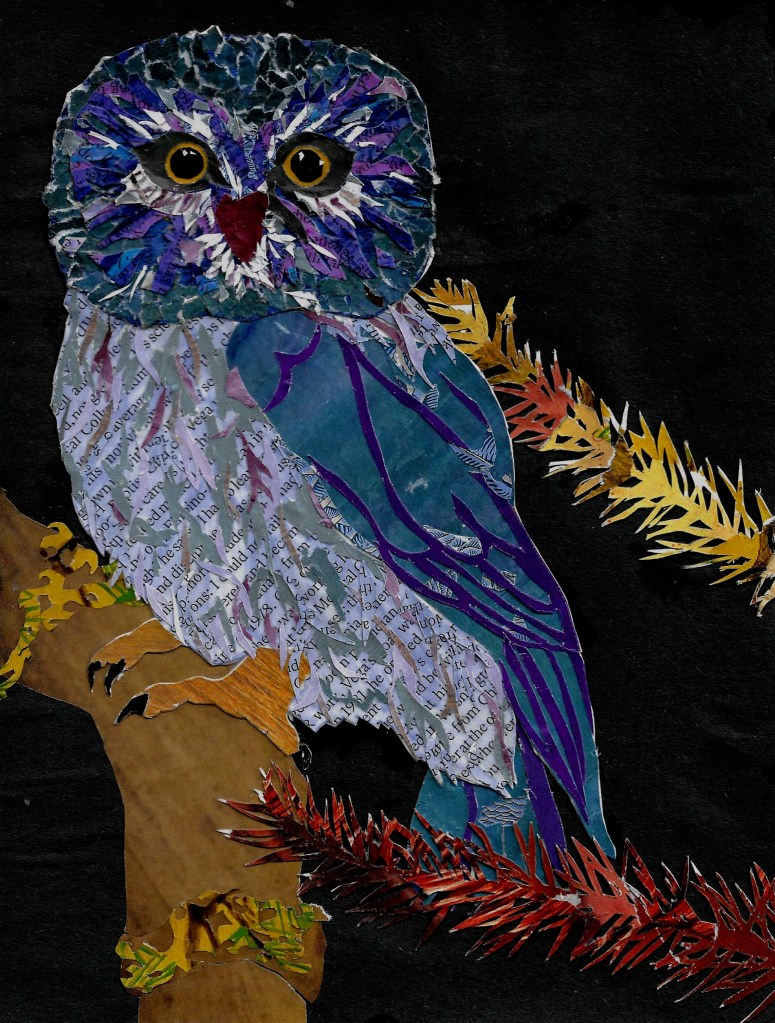
I quickly discovered that I lack my father’s knack for identifying bird calls, remembering subtle variations in tail feather length upon a brief field guide consultation. Struggling to retain identifying cues, I turned to my two passions: writing and illustrating. Through recounting personal anecdotes involving different bird species, I found myself able to maintain a mental catalogue, and in taking the time to sketch what I’d been observing, I was able to note far more details than I would have otherwise.
Thus emerged the goal: make one entry regarding a different bird per week. This goal has materialized in a blog encompassing all sorts of nature-related art and writing. It is a project loose in definition and honest in expectations–trust entries to be far less frequent than that initial weekly goal and to often stray from the specifics of identification.
Rachel Carson remains a hero of mine. Through her diligence and passion, she taught a generation to appreciate our winged neighbors and birthed an environmental movement with long-lasting results. I maintain Carson’s conviction that a “silent spring” is not inevitable, and that birds may be a source of inspiration for us all. I don’t know where this project will lead, but I hope it increases appreciation for and dedication toward the natural world and its conservation. Here’s to a future of magnificent springs!
 Sophie Aanerud